Paul V. Galvin Library resources features history news information search
Illinois Institute of Technology


JU-88
Specifications

By 1939 the JU-88 had been developed as a fast dive-bomber and reconnaissance aircraft, and later was used as a torpedo-bomber, a night fighter, a heavy day fighter and an anti-tank aircraft.


features > aircraft > ju-88

Aircraft - Junkers JU-88 (German)

JU-88

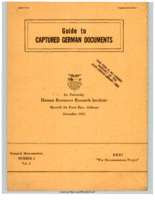
For the most part, American aerospace testing was done on American aircraft.  However, beginning with WWI, whenever the United States obtained examples of foreign aircraft - either from friendly countries through cooperative arrangements or from enemies via capture or defection- they were likely to wind up at McCook Field or Wright Field for a thorough evaluation which included flight testing if possible. 

"During WWII evaluations at Wright Field included allied aircraft like the Russian Yak-9 and the British Spitfire and Mosquito, and enemy aircraft including the German JU-88, ME-109, FW-190, ME-262, and the Japanese Zero.  The end of the war brought large numbers of captured aircraft for evaluation.  As with other test flight activities, much of the foreign aircraft evaluation moved to Muroc Air Base (later Edwards AFB) after the war, but even then the occasional foreign aircraft came to the Miami Valley for testing, as a MiG-15 (courtesy of a North Korean defector) at Patterson Field attests." (Source: Against the Wind)

JU-88

Specifications of the JU-88

Span: 65 ft. 10 in.

Length: 47 ft. 1 in.

Height: 15 ft. 11 in.

Weight: 26,700 lbs.

Armament: Six 7.9 mm machine guns

Engines: Two Junkers Jumo 211s of 1,200 hp. ea.

PERFORMANCE

Maximum speed: 295 mph.

Cruising speed: 225 mph.

Range: 1,553 mph.

Service Ceiling: 27,880 ft.

Source: Air Force Museum

Contact©2005 IIT
Paul V. Galvin Library   35 W. 33rd St.   Chicago, IL   60616   312.567.3616